Artificial intelligence has long since arrived on creator platforms. It schedules posts, sorts content, writes copy—and on some platforms, it now also writes the messages fans believe are personal.
For us, the decisive question isn’t whether AI is used. It’s where.
Our answer is simple: AI should take work off creators’ hands, not replace their fans. Everything that’s administration can be automated. Everything that’s relationship cannot. At FansyMe, this boundary isn’t a statement of intent—it’s written into our guidelines.
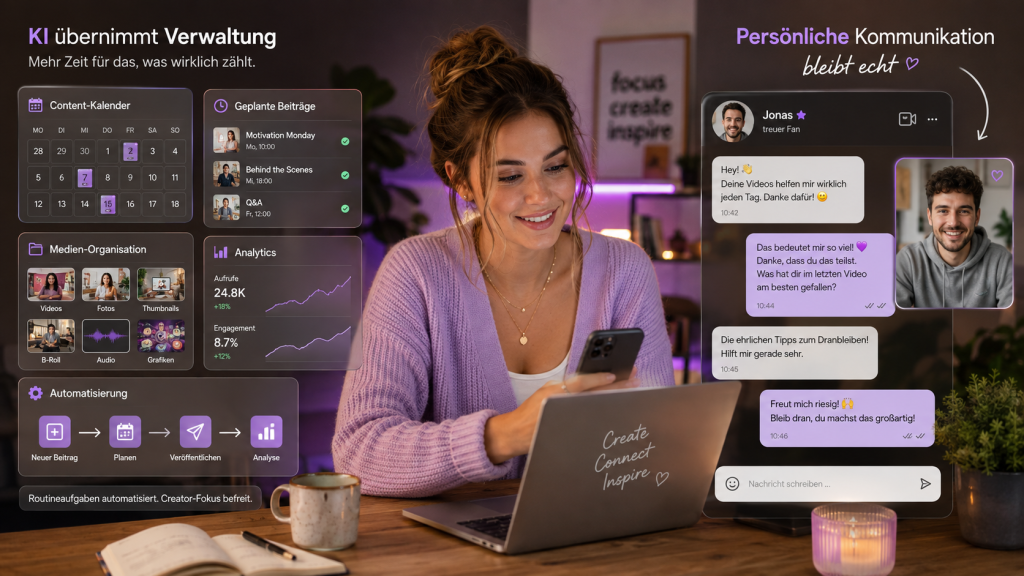
The line runs between administration and relationship
Behind a successful profile is far more work than is visible from the outside. Content has to be produced, reviewed, and sorted. Posts need to be scheduled. Promotion, pricing, rights management—much of it is organizational work that no one has an audience for.
That’s exactly where automation makes sense. A system that publishes the right post at the right time doesn’t replace anything a fan would even notice.
It becomes problematic at a different point: when it’s no longer administration being automated, but the relationship between creator and fan. When a fan writes, they’re usually not looking for the fastest response. They’re looking for that one person. They follow them for their personality, their humor, the way they write. If a system takes over at that point, the response time may remain—but the reason for the subscription disappears.
A conversation becomes a process. And once someone realizes they’ve been writing with a script, they rarely come back.
Ronya Rabe, as a creator, has her own opinion on AI: “Support from AI is hard to imagine without in everyday life today. That’s exactly why it’s extremely important to keep some areas of life personal and authentic. Contact with my fans is exactly one of those areas I would never want to hand off or automate.”
What we automate: posting from approved folders
Our automated posting works in a deliberately unspectacular way. Creators place content in a folder and approve it. Everything in there is published independently by the system.
The crucial point is the approval. The system doesn’t decide what gets published, only when. Editorial control remains entirely with the creator; the platform handles execution. Anyone who publishes regularly gains noticeable time without giving up control over their profile.
For us, that’s the blueprint for any further automation: it can take over processes, but not decisions and not conversations.
What we don’t allow: AI chat and third-party chatters
On many platforms, it’s now common for messages not to come from the creator themselves—either because an AI responds or because an external chat team writes on the creator’s behalf. Both are prohibited on FansyMe.
That’s a deliberate decision against short-term revenue optimization. A chat team can send messages around the clock; an AI can conduct a thousand conversations simultaneously. In the short term, that sells more than honest communication.
In the long term, though, it destroys exactly what distinguishes a creator platform from a content shop. When a fan pays for closeness and gets a simulation instead, that’s not a business model—it’s a disappointment on delay.
Anyone who gets a message here gets it from the person they’re here for. Sometimes a response takes longer because of that. But it’s real.
No AI creators and verification that backs it up
Part of the market is currently going a different route, making fully AI-generated creators the core of their offering. We explicitly do not: AI creators are not permitted on FansyMe. Behind every profile is a person.
To make sure that’s not just a claim, we secure it at two points.
First, at verification. Every creator verifies with an official ID document and selfie—the document must belong to the person actually standing in front of the camera. Additionally, we actively request release forms as soon as other people appear in content. Every recognizable person must have demonstrably consented to publication. That’s more involved than simple age verification, and that’s exactly the point: turnaround time stays short, but verification depth goes well beyond the market standard.
Second, in the content. Our detection systems check uploads for two things: AI-generated material and content that doesn’t come from the uploading creator. Both are different problems with the same consequence—fans pay for something other than what they assume. And both also hurt honest creators whose work is reused without their knowledge.
For fans: knowing who you’re talking to
Anyone paying for exclusive content, messages, or personal interaction should know what they’re getting. With images and videos, that’s still relatively obvious. With direct communication, though, an impression of closeness quickly forms that can’t be verified.
That’s why we keep the rules deliberately simple and public: no AI creators, no AI chats, no third-party chatters. A fan doesn’t have to guess whether there’s a person on the other end.
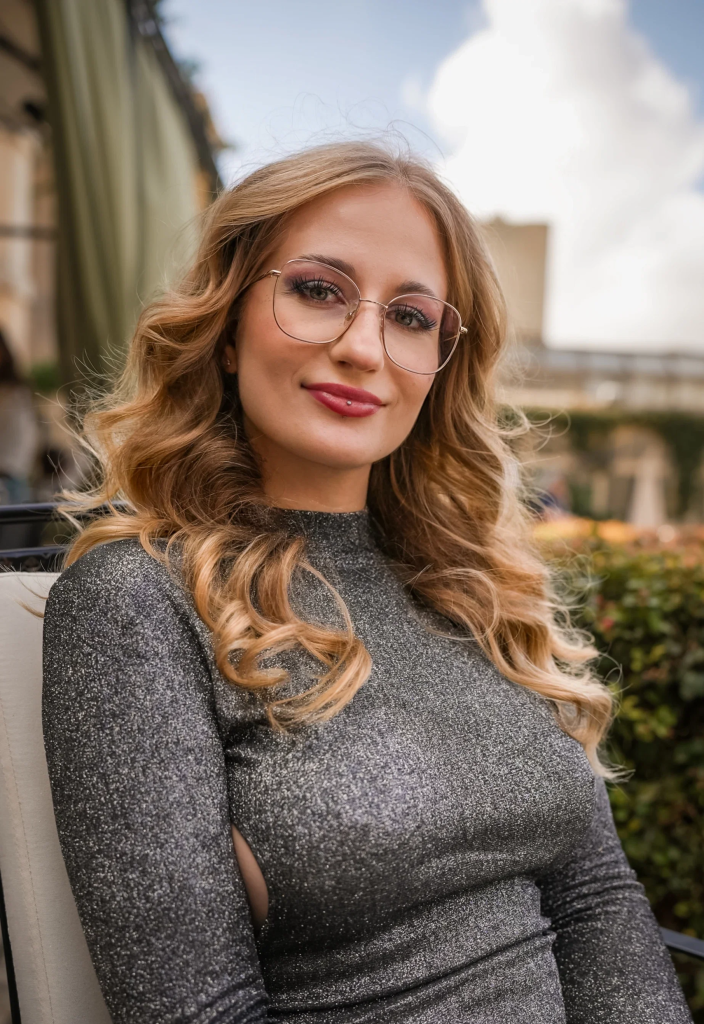
“The personal exchange with my fans is exactly what I enjoy and what brings me joy.
Simply handing that over to an AI is out of the question for me and would also be unfair to anyone interested in me and who I am,” Mika Nox tells us when we ask her opinion on using AI.
Human, not artificial
AI will get better at imitating people—in images, in text, in conversations. The more commonplace that becomes, the more valuable the opposite becomes: a chat that was actually conducted. A response that someone actually wrote. A video call where both sides know two people are talking to each other.
We use AI where it takes work off creators’ hands—and only there. So there’s more time for what it’s really about: real creators, real conversations, real connections.
[CTA – insert target URL] Want to work on a platform that protects your work instead of simulating it? → Start as a creator for free now
Frequently asked questions
Are AI-generated creators allowed on FansyMe? No. Behind every profile is a verified real person. AI-generated profiles are not permitted, and our detection systems check uploads for AI-generated material.
Can I have my chats written by an AI or a chat team? No. Both AI-generated chat messages and writing by third parties are prohibited. Messages must come from the creator themselves.
How does verification work? With an official ID document and a selfie. If other people appear in your content, we additionally request release forms documenting their consent.